
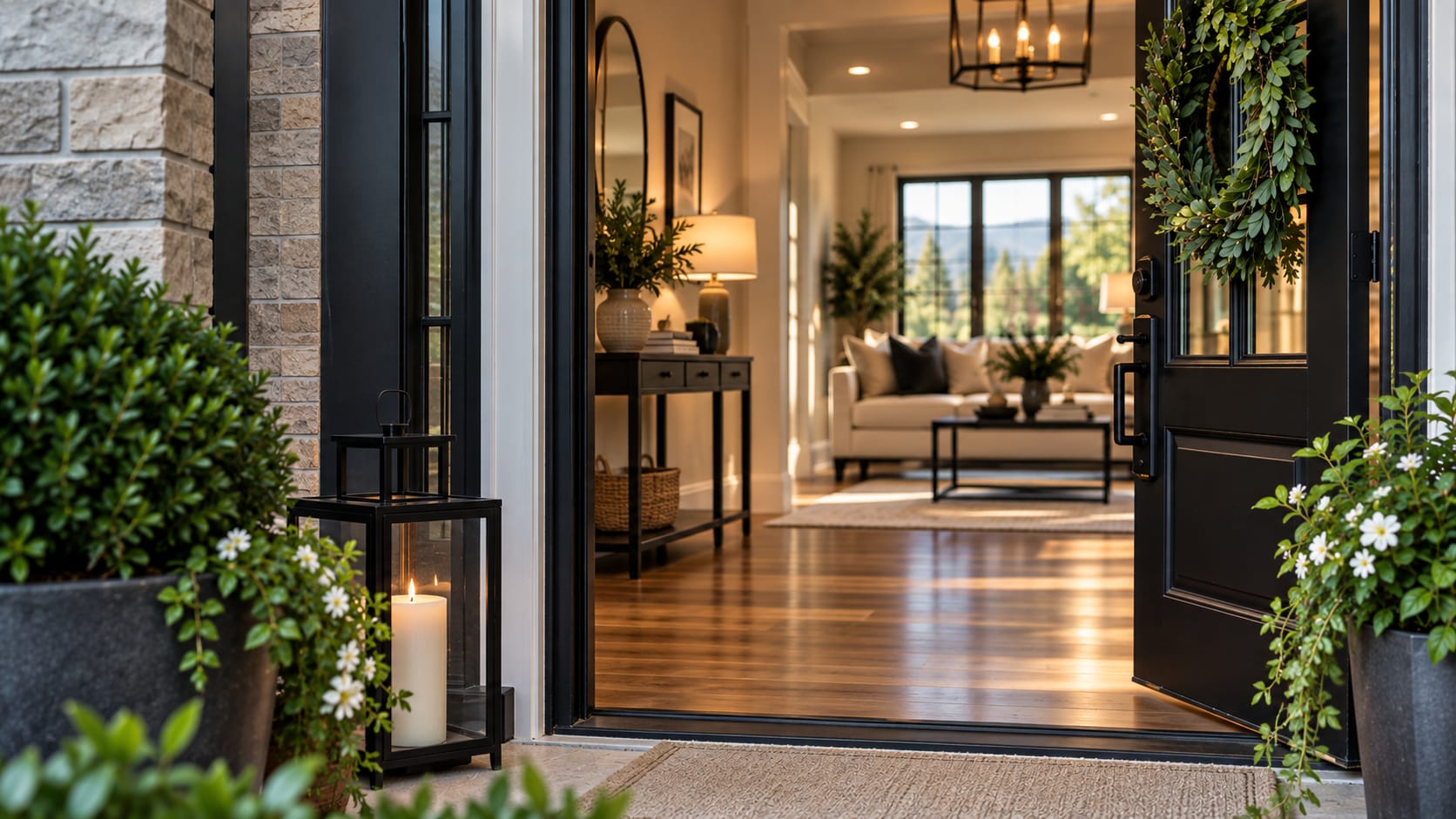

Most people know what an open house looks like.
The signs go out. The property is prepared. The doors open. Visitors walk through. Questions are answered. Names and contact information may be collected.
A few hours later, the signs come down and everyone goes home.
But a well-executed open house should accomplish more than simply getting people through the front door.
An open house isn't just an event. It's a prospecting environment—and a valuable source of information for both the homeowner and the real estate professional.
Traffic Isn't the Only Measure of Success
It's easy to judge an open house by attendance.
How many people came through?
Was it busy?
How many people signed in?
Those numbers can be useful, but they don't tell the entire story.
A property could have 30 visitors and produce very little useful information. Another could have eight visitors and generate several meaningful conversations, valuable feedback about the property, and legitimate buyer interest.
That's why one of the most important questions after an open house isn't simply:
How many people came?
It's:
What did we learn?
What did buyers think about the home?
How did they react to the price?
Were there consistent comments about the condition, layout or features?
Did buyers compare the property with others currently on the market?
Were any visitors seriously considering the home?
Did the conversations reveal potential obstacles that should be addressed?
That information can help a seller and their real estate professional better understand how the market is responding to the property.
Every Visitor Has a Different Story
One of the things that makes an open house interesting is the variety of people who walk through the door.
Some are actively looking for their next home.
Some are at the beginning of their search.
Some already own a home they may need to sell before they can purchase another.
Some are neighbors interested in what's happening in their community.
Others may simply be trying to understand the market before making a decision several months from now.
Each conversation can reveal something different.
A good real estate professional isn't simply trying to get someone's name onto a sign-in sheet.
They're listening.
They're asking appropriate questions.
They're paying attention to what visitors say about the home and their own real estate needs.
And they're recognizing when a conversation creates an opportunity to provide useful information or assistance.
The Sign-In Sheet Isn't the Strategy
Contact information can certainly be useful, but a list of names and phone numbers isn't much of a strategy by itself.
Context matters.
Knowing that someone attended an open house is one thing.
Knowing that they're pre-approved, looking within a particular price range, need another bedroom, prefer a certain school district and hope to move within the next few months is something entirely different.
The same principle applies to potential sellers.
A neighbor stopping by may simply be curious.
Or that neighbor may be thinking about selling their own home next year and trying to understand what properties in the neighborhood are worth.
You won't necessarily know unless there's a conversation.
The objective isn't to turn every visitor into a sales opportunity.
It's to understand who walked through the door, what matters to them and whether there's an appropriate reason to continue the conversation.
Good Prospecting Shouldn't Feel Like a Sales Pitch
The word "prospecting" sometimes creates the wrong impression.
It doesn't mean trying to sell something to every person who walks into an open house.
Effective prospecting is much more natural than that.
It means asking good questions, listening carefully and understanding someone's situation before deciding whether you can be useful.
Someone may be interested in the home.
Someone else may realize the property isn't right for them but need help finding another one.
A homeowner may have questions about selling.
Another visitor may not need anything from you at all.
That's okay.
The purpose of a good conversation isn't to manufacture an opportunity where one doesn't exist.
It's to recognize an opportunity when one does.
An Open House Can Also Provide Valuable Feedback to a Seller
For homeowners, an open house can provide something beyond exposure.
It can provide information.
When several visitors make similar comments about a property, that feedback may help the seller and their real estate professional better understand how buyers are perceiving the home.
That doesn't mean every comment should result in a change.
Individual opinions are just that—individual opinions.
But patterns can matter.
If multiple prospective buyers respond similarly to the price, condition, presentation or a particular feature of the property, that information deserves attention.
A thoughtful real estate strategy doesn't simply create activity.
It learns from that activity.
The Open House Doesn't End When the Door Closes
Some of the most important work happens after the open house is over.
The property is secured. The signs are collected. But the information gathered during those few hours still needs to be evaluated.
Which visitors expressed genuine interest in the property?
What feedback should be shared with the homeowner?
Are there questions that need answers?
Which conversations deserve follow-up?
Were there prospective buyers whose needs might be better served by another property?
Was there a homeowner who wanted information about selling?
Good follow-up shouldn't be a generic message sent to everyone who attended.
It should have a purpose.
When someone tells you what they need, effective follow-up should reflect what you learned from the conversation.
For Real Estate Agents, There's Another Opportunity
There's an important lesson here for real estate professionals as well.
You don't necessarily have to be the listing agent to benefit from learning how to conduct an effective open house.
Agents frequently host open houses for other agents and their sellers.
For an agent who is building a business, that can provide several hours of face-to-face interaction with people who are actively engaged with the real estate market.
Approached correctly, that's valuable experience and a legitimate business-development opportunity.
But simply being present isn't enough.
Preparation matters.
Questions matter.
Listening matters.
Information matters.
And follow-up matters.
A Better Open House Starts With a Better Strategy
Whether you're a homeowner preparing to sell or a real estate professional preparing to host, the underlying principle is the same:
A successful open house should have a purpose beyond simply getting people through the door.
For a homeowner, that means working with a real estate professional who understands that an open house is part of a larger marketing and selling strategy.
For an agent, it means understanding how to turn conversations and information into appropriate next steps.
In both cases, the goal isn't activity for the sake of activity.
The goal is to create something useful from it.
Thinking About Selling Your Home?
At Tennessee Trust Realty, we believe selling a home deserves a thoughtful strategy.
That means understanding the property, the market, the homeowner's objectives and how each part of the selling process can work together.
If you're considering selling a home in East Tennessee, we'd be glad to have a conversation about your property, your goals and what the right strategy might look like for you.
Contact Tennessee Trust Realty to start the conversation.
Are You a Real Estate Agent?
I've spent much of my career in sales, and one principle has followed me into real estate:
Opportunity rarely announces itself. You have to learn to recognize it.
That's one of the reasons I created The Modern Open House Revenue System.
It's a practical, step-by-step system designed to help agents approach open houses with greater purpose—from preparation and promotion to conversations, information gathering and follow-up.
The goal isn't to give you another collection of theories or generic sales scripts.
It's to give you a framework you can take into your next open house and actually use.
The Modern Open House Revenue System is available for $37 with immediate digital access.
Get The Modern Open House Revenue System — $37
Stop waiting for real estate business to find you.
Create it.